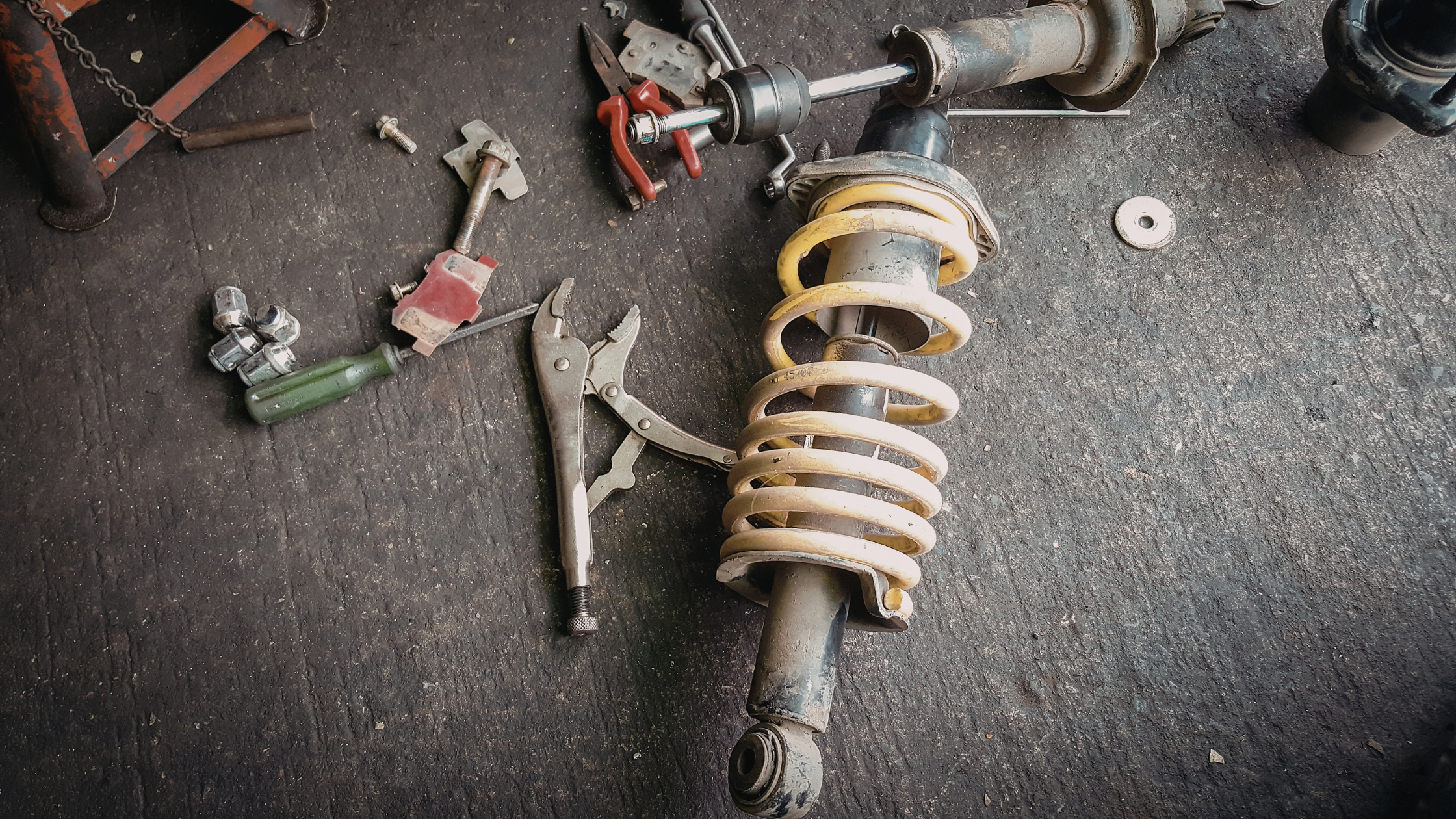
If your vehicle suddenly feels different in early spring—pulling to one side, riding rougher than usual, or wearing tires unevenly—winter may be the reason. Suspension problems after winter are common because cold temperatures, potholes, and rough road conditions place heavy stress on steering and suspension components.
Spring often reveals damage that developed gradually over months of winter driving.
Why Winter Roads Damage Suspension Systems
Winter is tough on road surfaces. Freezing and thawing cycles cause pavement to expand and contract, leading to cracks and potholes. When your vehicle hits a pothole, the impact transfers directly to the suspension system.
Components affected include:
- Shocks and struts
- Control arms and bushings
- Ball joints
- Tie rods
- Wheel alignment angles
Even a single hard impact can knock alignment out of specification or accelerate wear on suspension parts.
What Wheel Alignment Actually Does
Wheel alignment refers to how your tires are positioned relative to each other and the road. Proper alignment ensures:
- Even tire wear
- Stable steering
- Predictable handling
- Maximum fuel efficiency
When alignment is off, tires don’t meet the road evenly. This causes uneven tread wear and can make your vehicle drift or pull to one side.
Winter potholes are one of the leading causes of alignment changes.
Signs Your Alignment May Be Off
Spring is when many drivers first notice alignment issues. Common warning signs include:
- The vehicle pulls left or right on a straight road
- The steering wheel is off-center
- Uneven or rapid tire wear
- Vibration in the steering wheel
Even small alignment changes can reduce tire lifespan and affect handling performance.
Suspension Components Wear Down Over Winter
Suspension systems absorb shock and keep your tires in contact with the road. During winter, repeated impacts from rough pavement, snow-packed roads, and potholes strain these components.
Worn shocks or struts may cause:
- Excessive bouncing after bumps
- Nose-diving when braking
- Swaying during turns
- Reduced traction on uneven surfaces
Cold temperatures can also stiffen rubber bushings, increasing wear and sometimes leading to cracking.
Uneven Tire Wear Is an Early Warning Sign
One of the clearest indicators of suspension or alignment trouble is uneven tire wear. Winter driving conditions often hide this issue until you rotate tires or inspect them more closely in spring.
Look for:
- Excess wear on the inside or outside edge
- Cupping or scalloped tread patterns
- One tire wearing faster than others
Ignoring uneven wear not only shortens tire life but can also compromise traction and safety.
Why Spring Is the Ideal Time for Inspection
Spring provides the perfect opportunity to assess damage from winter. Warmer weather makes it easier to inspect components thoroughly, and addressing problems now prevents larger repairs later in the year.
Alignment and suspension issues rarely fix themselves. Left untreated, they can:
- Accelerate tire replacement
- Reduce fuel efficiency
- Increase stress on steering components
- Affect overall driving safety
Early detection often means simpler and less expensive repairs.
Protect Your Ride and Your Tires
Suspension problems after winter are common, but they don’t have to become major issues. If your vehicle feels different, rides rougher, or shows signs of uneven tire wear, it’s worth having alignment and suspension components inspected.
Winter roads may be unavoidable, but staying proactive in spring ensures your vehicle handles properly, rides smoothly, and protects your investment in tires and steering components throughout the year.